
Young Damsels Star in Assisi’s Medieval Festival, Calendimaggio
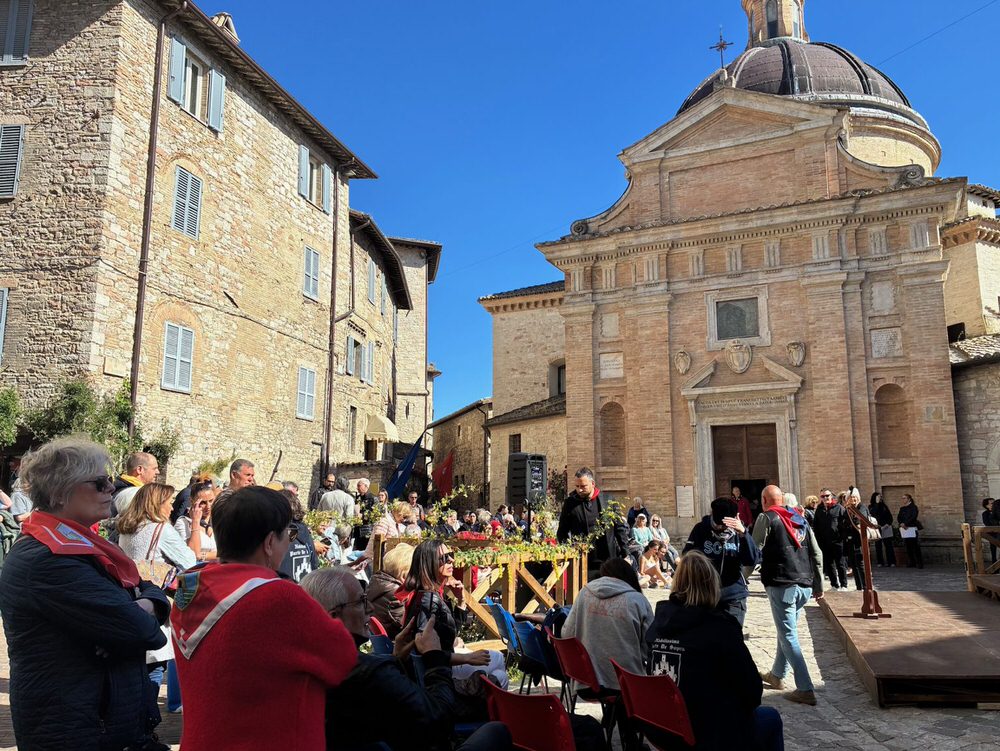
Ogni anno il 30 aprile, la città di Assisi si anima quando i residenti si radunano davanti alla storica Chiesa Nuova in attesa del Calendimaggio, uno dei più suggestivi festival medievali d’Italia. L’evento inizia con la presentazione delle damigelle, giovani donne scelte per rappresentare la primavera, dando ufficialmente avvio a giorni di fasti, musica e a una secolare rivalità tra i rioni della città alta e della città bassa.
Vestite con elaborati costumi medievali e accompagnate da tamburi, bandiere e autorità cittadine, le damigelle vengono presentate a una folla festante in una cerimonia che segna l’apertura ufficiale delle celebrazioni. La loro presentazione simboleggia l’arrivo della primavera e il rinnovamento della vita, temi centrali del Calendimaggio.
La festa prosegue per diversi giorni con cortei, competizioni musicali e rievocazioni storiche che trasformano Assisi in un vero e proprio quadro medievale vivente, unendo storia, cultura e spirito di comunità in uno dei festival primaverili più evocativi d’Italia.
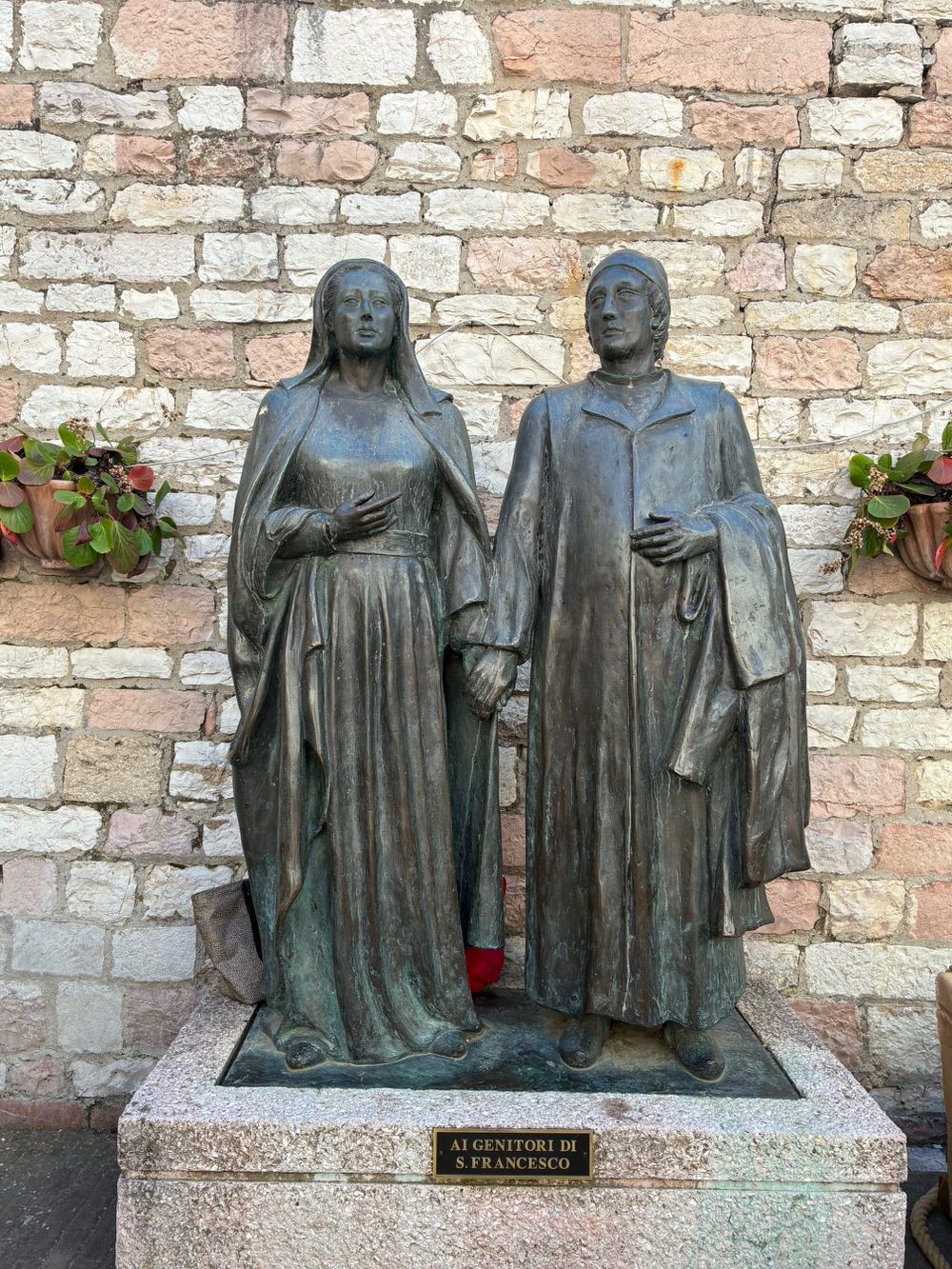
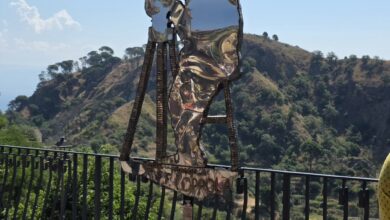
Every year on April 30, animated assisani gather in front of the 17th-century Chiesa Nuova (the New Church) just off Assisi’s main square, Piazza del Comune. To the right of the church (said to be the legendary site of the home of San Francesco di Assisi), contemporary bronze statues of Pietro di Bernardone and Monna Pica (parents of San Francesco), sculpted in 1984, stand solemnly and seem to be viewing the scene.
Before long, one hears the beating of drums announcing the start of the festivities all are awaiting: the presentation of the damigelle (young damsels). One will reign as Madonna Primavera (Lady Spring) during Calendimaggio. Calendimaggio is an ancient Italian spring festival held in Assisi during the first week of May. It celebrates the return of spring and life’s renewal with dramatic medieval pageantry, costumed parades, musical competitions, and an intense, centuries-old rivalry between the two halves of the city.
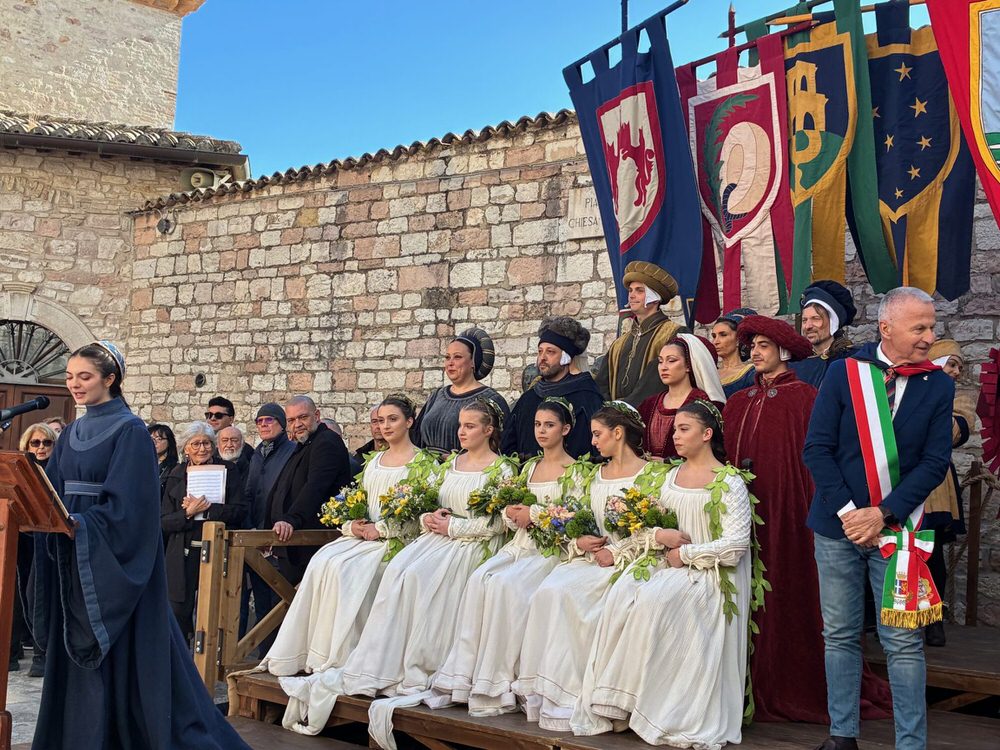
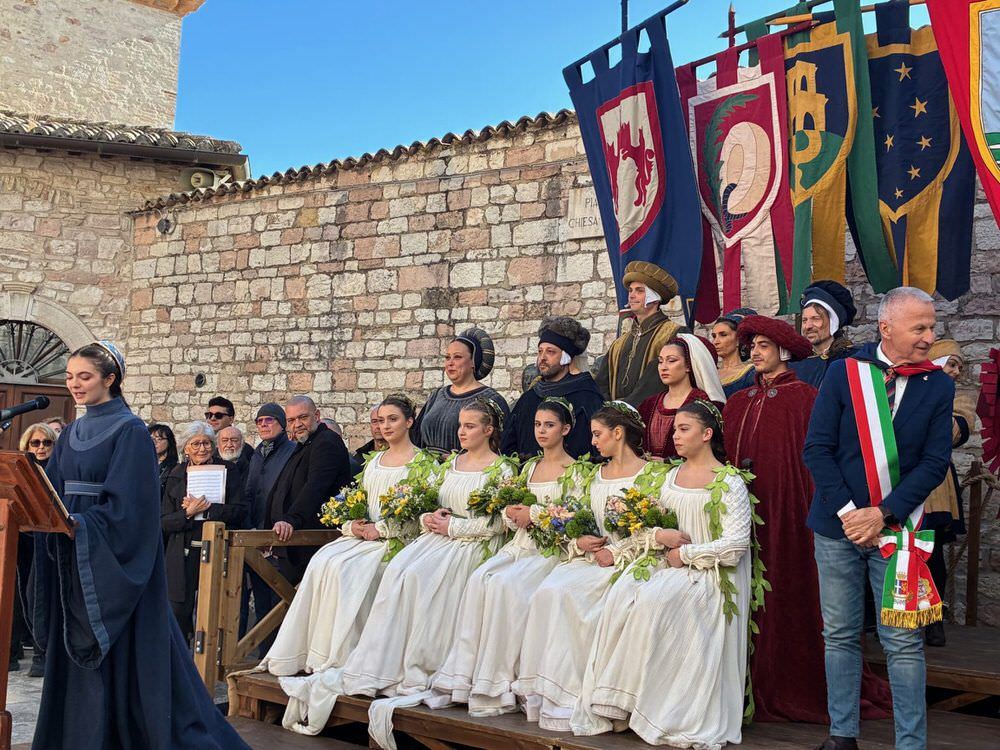
Stately young damsels in medieval dress parade slowly and solemnly into the piazza of Chiesa Nuova. The five damigelle of la Nobilissima Parte de Sopra (the Most Noble Part of Upper Assisi) entered first. In the year prior, la Parte de Sopra lost the battle with the lower part of Assisi during Calendimaggio, ceding victory to la Magnifica Parte de Sotto (“the Magnificent Part of Lower Assisi”).
Sopra‘s color is blue and the blue flag stood behind the five damigelle of Sopra, dressed in white, with figures in medieval noble dress backing the damigelle. Each damsel was introduced to the public, rising with a smile to receive their applause.
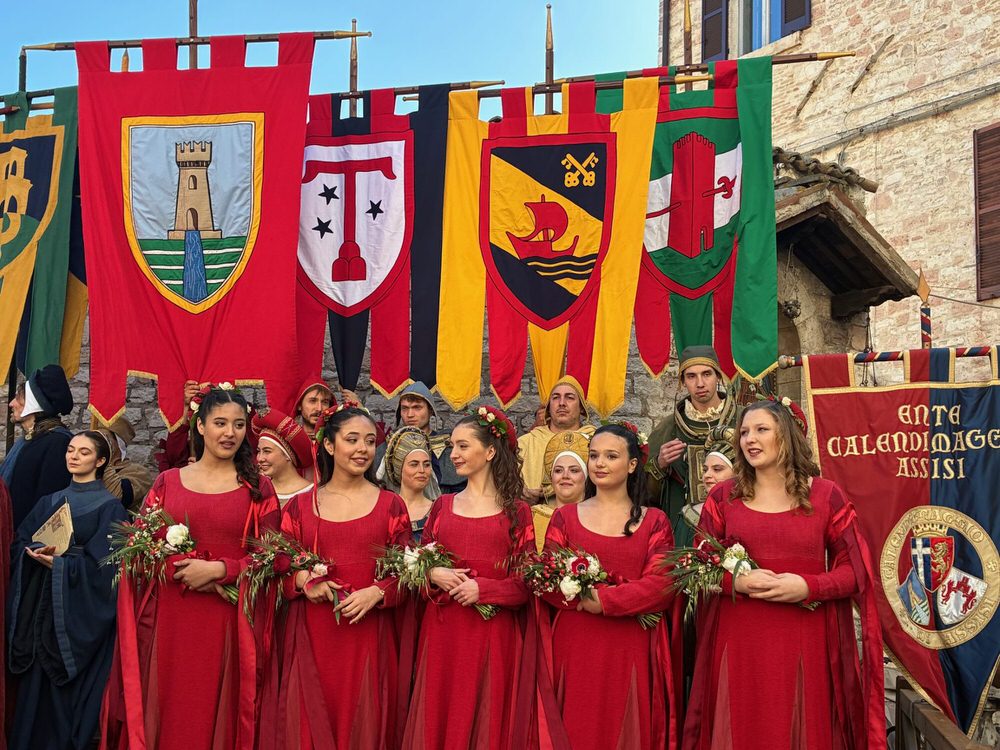
Assisi’s mayor was at the ceremony in his red, white and green sash. Behind Mayor Walter Stoppini, noble figures of Sopra stood in front of the beloved blue flag of Sopra flanked by the three flags of the terzieri di Sopra (the three sections of Upper Assisi). The presentation of the damigelle of la Magnifica Parte de Sotto followed, each dressed in red, their color, and standing proudly in front of the three flags flanking the treasured flag of Sotto.
Lauding the young damsels, the Assisi mayor was joined by the President of the Ente Calendimaggio (the organization in charge of the festival) and thus the official “launch” to Calendimaggio took place. Four days of medieval splendor in Assisi followed.